A counselling psychologist, team leader, leadership development consultant, and trauma-informed practitioner writes about living on different continents, leading a multidisciplinary team, founders in the family, and BWRT.
1 After school you studied the sciences, but in fact you’d had a different dream…
My dream was to dance and go to the Cape Town University Ballet School. I wondered about doing psychology and went to discuss this with student services who seemed aghast that I wanted to do psychology. I enrolled in the sciences but then met my husband to be and moved away.
2 How did you land up in personal development training?
I fell into development training because my husband was already in the business and encouraged me to get involved. We initially offered an American self-development programme but both of us had a large interest in the field of personal development, combined with philosophy, and subsequently decided to develop our own programme incorporating values-based training combined with learning to do self-hypnosis. As part of that programme, I started to look at the difficulties associated with cross-cultural communication and developed a corporate programme that would have been an early version of what we now refer to as psychological safety in the workplace.
You can also listen to Alta’s advice on how business founders can dissolve subconscious conflicts.
3 What led to your qualifying as an counselling psychologist?
I made a decision to return to university to gain a qualification to extend my knowledge, but also for ethical reasons. I studied through UNISA for my first two degrees, and was then accepted at the University of Natal for my Masters and registration as a Counselling Psychologist. I was fortunate to gain an early exposure to neuroscience while there.
4 What did many years in special education classes in the US and New Zealand teach you?
My introduction to school psychology occurred in the USA where I had to gain my certification as a school psychologist. While there, I was fortunate to engage in further education in the assessment and treatment of brain injury and the assessment and management of autism. I gained a lot of expertise in all forms of assessment and how to accommodate learning for students with diverse learning difficulties. From there, I was offered a position as an educational psychologist in New Zealand, initially to work with children with behavioural difficulties, but then shifted to work largely in the field of learning difficulties. I lead a multidisciplinary team working with student needs and also produced and ran training programmes for parents and teachers in dealing with these difficulties. I gained a lot of insight into a large range of learning needs and how these students process information. I worked within a very proactive team of dedicated professionals who all strove to adapt and accommodate learning programmes.

Image: Unsplash
5 How did specialist training in neuroscience influence how you view people?
My interest in and knowledge of neuroscience grew out of working with learning difficulties and trauma. Understanding trauma and the impact it has on how we process information is what grew my interest in neuroscience. I realised, when dealing with trauma cases, that cognitive processes alone are somewhat lacking, and what we now know in terms of neuroscience explains why more is needed.
This is what I love about BrainWorking Recursive Therapy. BWRT addresses difficulties that are lodged within the Reptilian Brain and beyond conscious awareness. Trauma experiences cause us to embed emotional and cognitive responses for protection, that however outlive usefulness. It then skews our thinking and that can lead to ongoing emotional problems. Of course, traditional therapy also acknowledged the need to shift negative patterns but use cognitive processes that are already adjusted as a result of Reptilian Brain processing. It has been a long road of noting, evaluating, learning, and refining implementation.
6 Both your children are founders. Would you like to say more?
Both my children have pursued their own interests and developed their skills accordingly. My son had an interest in robotics since the age of 8. He comes out of the start-up of gaming, including games like Dungeons and Dragons. He studied computer science but quickly realised that what was taught lagged behind programming development. While he didn't move into robotics as desired, he went into computer modelling and he and his small team developed the visual graphics associated with modelling weather systems. Their programme is active in many EU countries and the UK.
My daughter obtained a doctorate in neuroscience and was instrumental in developing an AI training hub in Brisbane, then moved to the US and is in the start-up scene. She is in the final development stages of her product development. For both of them, it has been a long and difficult road that they have tackled with determination and resilience.

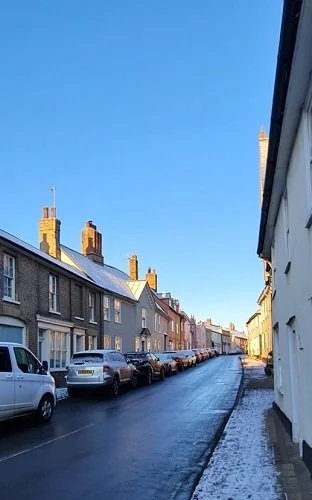
The village of Boxford in Suffolk
7 How did your move to the UK come about?
My husband is British and in the latter part of our lives, he decided he wanted to return home. So, once again I had to process my visa and here we are. I do enjoy the historical richness in the country. He has been involved in heraldry most of his life and has a way of bringing life to the heraldic arms on display. It adds a whole new dimension to the places we visit.
You can also listen to Alta’s insights into how our nervous system affects our decisions - is it true that the body decides first, followed by the brain?
8 What are your favourite ways to recharge your batteries?
I'm a big believer in habits and exercise. So my days begin with exercise and end with breathing and relaxation exercises. I love music, and that both calms and recharges.
About Alta
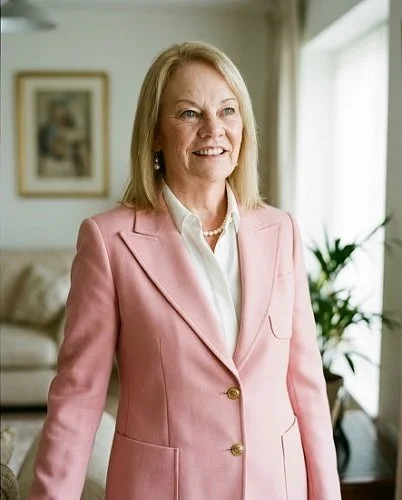
Alta Rens is a counselling psychologist, team leader, leadership development consultant, and trauma-informed practitioner based in Suffolk, England. Her career spans more than 30 years. She works privately, and online, with business founders who find that building something great costs them more than they let on. Issues may include financial anxiety and the psychology of risk, identity and self-worth under pressure, decision fatigue and cognitive overload, and team conflict and trust breakdown.
Alta’s work is not coaching but psychologically deep, neurologically informed work that goes beneath the surface, addressing what's actually driving the pattern, the block, or the burnout.
Website http://www.rebootpractice.com/
Email alta@rebootpractice.com
LinkedIn: Alta Rens
Instagram: rebootwithalta
Images of Alta Rens and Boxford: supplied
Thumbnail of Bury St Edmunds, Suffolk, which Alta loves: Pexels