Jonathan Blaauw on abracadabra, reality in disguise and where freedom begins
A digital product specialist, writer & the founder of Preflection writes about boarding school in the foothills of the Himalayas, remaining faithful to arbitrary labels and a hero, a villain, a beginning, a middle and an end.
1 What did you love doing as a child, and what parts of that younger version of yourself have stayed with you?
I was a very quiet, introverted child, and that hasn't changed much. Looking back, I can see that I often thought about things differently from other children my age, and that sometimes left me feeling quite separate from them.
Books became my solace and, in many ways, my salvation. Reading wasn't really a pastime for me. It was a way of stepping outside a reality I often found harsh and incomprehensible. Fiction made me feel safe because within a story, everything had a place. There was a hero, a villain, a beginning, a middle and an end. However complicated things became, there was usually some sense that they would eventually work themselves out. I craved that stability, and I found it in stories.
In many ways, that scared little boy is still very much a part of me. I think my curiosity and thirst for knowledge are partly driven by that same desire for certainty and understanding. I want to know how things work, why people behave the way they do, and what lies beneath the surface of things.
Some of the most healing work I've done in the last few years has involved what is often called reparenting the inner child — recognising needs that weren't met during my formative years and learning to meet them myself. Not because I didn't have a loving family or because I wanted for anything materially, but because, emotionally, I didn't always know how to ask for what I needed. In some cases, I didn't even know what those needs were.
For me, reparenting has been about learning to recognise those needs and respond to them with kindness rather than judgement. Reflection has naturally become a big part of that process.
There is a delicate balance to this, though. As important as it is to do the emotional work necessary for healing, I think it's equally important to learn self-acceptance.
As a lifelong introvert, I've spent a lot of time feeling that I should be different. More sociable. More outgoing. More confident. I used to feel as though there was something wrong with me because conversations can exhaust me, or because I'd often rather be reading a book in bed than at a party.
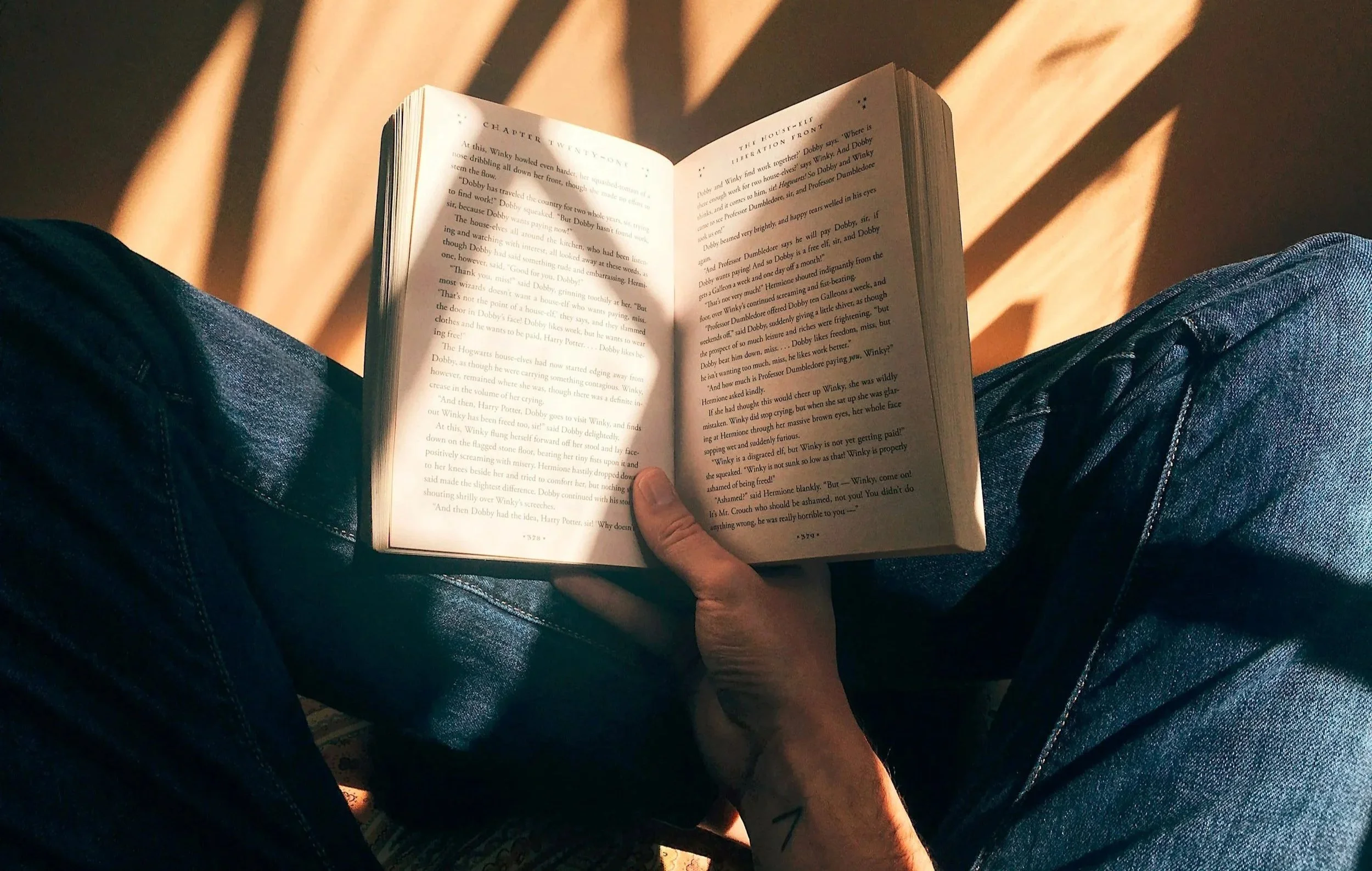
Image: Unsplash. Model used.
I've gradually come to understand that this is simply part of who I am. Of course, life needs balance, and I continue to work on stretching myself when it's good for me. But I no longer believe I need to fix the fundamental parts of my personality that make me who I am.
Nurturing that younger version of myself means allowing him to feel safe enough to simply be himself.
So if I'm in bed at eight o'clock on a Friday night reading a book, I don't feel guilty about it anymore. I don't feel weird. I let myself enjoy it.
I think ten-year-old Jonathan would be pretty proud of his grown-up self for that.
2 You've lived in different places and had the opportunity to travel. Which places have stayed with you, and why?
My first extended period of travel came when I went to India as an exchange student at 16. I attended boarding school in the foothills of the Himalayas, and it was an incredible experience. My eyes were opened to so many things. Everything was different, from the language and culture to the food and the weather.
I think I found the spiritual aspects most intriguing. I had the privilege of visiting the Golden Temple and the Taj Mahal, and I read the Bhagavad Gita. I clearly remember attending a ceremony in a Hindu temple and feeling the same sense of ease and comfort that I found in church back home. I remember thinking that this feeling had very little to do with religion and everything to do with spiritual connection. It was one of those experiences that quietly changes the way you see the world.

Image of Taj Mahal: Unsplash.
About a decade later, I was lucky enough to live in California for a year, in a small town called Marina, just north of Monterey. The idea at the time was to live there forever, but life has a habit of making a mockery of our plans, and things didn't work out that way. Memories from that time are bittersweet, but in hindsight I'm grateful both for the experience and for the fact that I eventually returned to South Africa.
Locally, I've moved around a lot. I've lived in countless different suburbs across three provinces and haven't really stayed in one place for very long. I've been in Johannesburg for the last six years, which is a record for me, and one I suspect I'll extend.
Because while travelling and exploring is a beautiful privilege for anyone lucky enough to experience it, I've learnt that moving isn't a solution to my problems. Wherever I take myself, there I am.
I can't outrun myself.
I'll hopefully have many more adventures and travels in the future, but I now understand that the most important journey I'll ever take is the one from my head to my heart.
And that is a road I walk a little further down each day.
You can also listen to Jonathan discuss Preflection, his free app offering mood-matched reflection questions that clarify today and help us meet tomorrow feeling more grounded.
3 You’ve mentioned your realisation that some thoughts help us grow while others keep us stuck. What led to this insight?
I wish I could say this realisation arrived in a flash of insight, but it came to me gradually over the years, mostly through observing my own thoughts and behaviours.
A while ago I learned that abracadabra, the word we associate with fantasy and magic, is sometimes said to come from an Aramaic phrase meaning something like, “I create as I speak.” I've often thought that, for me, it's more a case of: I create as I think.
My thoughts have a very real and tangible impact on the world I experience. You don't even have to look particularly deeply into psychology to understand this. Cognitive behavioural therapy, for example, is built around the relationship between our thoughts, feelings and behaviours. The quality of my thinking influences how I feel, which influences how I act. And then my actions feed back into my thinking, creating a cycle.
Image generated by ChatGPT
Certain thoughts can ignite that cycle in a negative direction, and it can take me to some very dark places. But the opposite is also true. Changing the way I think can create a positive cycle.
I don't believe in manifestation in the sense that simply thinking about something will make it appear. I wish that were the case, but unfortunately life doesn't work that way. I do, however, believe that small shifts in thinking can make a massive difference to the direction of our lives.
If I tell myself I'm not good enough and constantly recall all the times I've failed, I'll feel like a failure. I'll be less likely to try something new, which gives me fewer opportunities to succeed, which then gives me more evidence that I'm a failure. The cycle reinforces itself.
But if I change the thought to, “I haven't succeeded yet,” everything changes. Failure becomes less of a verdict and more of a stepping stone. I keep trying. I learn. I improve. And eventually that small shift in thinking starts producing very real changes in my life.
Someone once said something to me that completely changed the way I thought about failure: “Imagine if you were 30 failures away from success. How quickly would you want to fail?”
That really stayed with me.
These ideas excite me because they're so small and so simple, yet they're breathtakingly profound. We don't necessarily need to completely reinvent ourselves. Sometimes we just need to notice the thought we're having and ask whether it's taking us where we actually want to go.
Understanding the power of my thoughts has changed almost everything for me. It has made me much more curious about my own mind, and much more careful about the stories I allow it to tell me.
4 You told me that writing has always been one of the ways you make sense of the world. What genres or forms of writing do you work in?

Image: Unsplash. Model used
Like many writers, my passion for the craft came from my love of reading. I've always been particularly drawn to fiction, so that's what I gravitated towards when I eventually gathered the courage to put pen to paper — or fingers to keyboard — later in life.
I think fiction is sometimes dismissed as frivolous, but I strongly disagree. Fiction contains deep truths about human nature and society for anyone willing to look for them. It also gives the writer a way to explore difficult ideas in a safe format. You can take something frightening, painful or complicated and give it to a fictional character, put them in an impossible situation, and see what happens.
I've heard the artist described as someone caught in the tension between wanting to expose their true selves and wanting to hide. That sentiment describes me almost perfectly, and I think it's especially true of writers. In some ways, I feel like I was born to write.
When I first started writing fiction, I was convinced I'd become a world-famous author. It was only a matter of time. My ideas have shifted somewhat since then.
I'm no longer solely focused on building a career as a writer, but I can say with certainty that whatever I do, writing will always be at the centre of it. Writing requires communication, the ability to condense and organise thoughts, structure and logic alongside flexibility and creativity. It requires problem-solving too. Getting a story to behave exactly the way I want it to can sometimes become a genuinely mind-bending challenge.
Those are skills I've honed through writing and now use in some form almost every day. In fact, I think that's one of the unexpected gifts of writing: even when you're not writing, you're still using what writing taught you.
I do look forward to a time when I'll be able to return to fiction properly. There are still plenty of stories in my head that I'd like to get out.
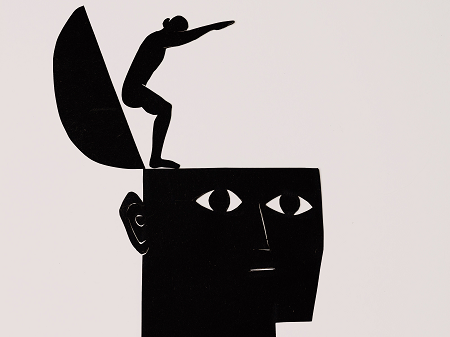
Image: Unsplash
I've also done quite a bit of non-fiction writing, particularly about history, popular culture and literature. These subjects fascinate me for much the same reason fiction does: they reveal things about human nature that can be intriguing, delightful and terrifying, sometimes all at the same time.
History, music, films and books are all ways we try to explain and interpret the world around us. We create stories about who we are, where we came from, what matters and what it means to be human. Those interpretations fascinate me endlessly. I think that's ultimately what draws me to writing in all its forms. I'm curious about people, and writing gives me a way of looking more closely.
5 You’ve mentioned that, looking back, you could clearly see how many of your stories were quietly exploring the ideas that would eventually become your Preflection ap: pain, growth, redemption, perspective and hope.
Fiction is reality in disguise, so I don't think it's surprising that I began exploring these ideas through stories before I ever thought about them directly.
Questions that have always fascinated me — how do people respond to challenges and adversity? Why do some people seem to bounce back while others become trapped by what has happened to them? What does healing actually look like? — all found their way into my writing.
The art of fiction is essentially taking compelling characters, putting them in difficult situations, and then watching what they do. In that sense, it becomes a safe way of exploring aspects of ourselves that might otherwise remain hidden.
The circumstances in my stories are fictional, of course, but the emotional responses of the characters often come from my own experience. I believe suffering is part of the human condition. It's unavoidable. We fear not getting what we want while simultaneously fearing losing what we already have. In other words, fear is inevitable.
Reading and writing fiction helped me process some of these things, but eventually I started wondering about more direct ways of understanding and coping with them.
The world is full of motivational and self-help material, and I think it absolutely has its place. But I was looking for something slightly different. A lot of what I encountered seemed to begin with the assumption that I was flawed, broken or somehow in need of fixing.
To sell umbrellas, you need to convince people that it's going to rain. I sometimes think the same principle can creep into self-help: if people are convinced that something is wrong with them, they're more likely to believe they need something to fix it.
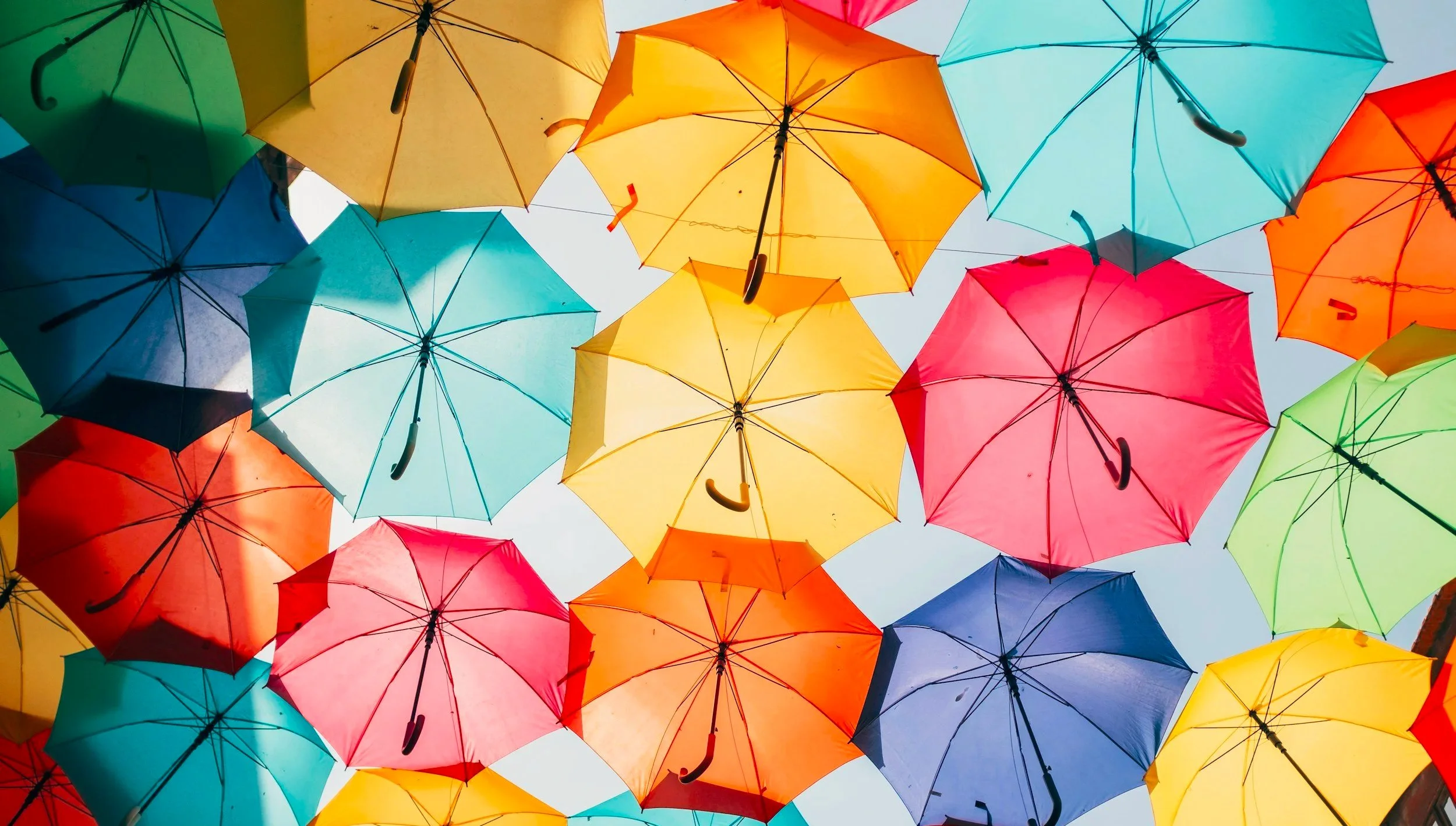
Image: Unsplash
What I found interesting about learning about myself through fiction was that there was no assumption of brokenness. I could simply notice something. I would recognise a thought, fear or behaviour in a character and realise that some part of me understood it intimately. There was nothing to fix. I was simply becoming more aware of myself.
In many ways, Preflection grew out of that realisation. It's a combination of some of the positive aspects of self-help with the power of awareness I experienced through fiction.
Journaling itself is certainly not new. It's an ancient practice, and I had no interest in reinventing the wheel. I simply thought there might be a slightly different way to approach it — one that makes reflection feel accessible, enjoyable and genuinely useful rather than like another exercise we have to complete.
It's also no accident that one of the core philosophies behind the questions in Preflection is narrative identity. Our lives are, in many ways, stories that we are constantly interpreting as we go. We experience something, decide what it means, and then carry that interpretation forward.
That idea has fascinated me for years. I think Preflection is simply the point where many of those questions I've been exploring through reading, writing and life finally came together in one place.
Change the interpretation, and you can change the direction of the story.
6 In your story “Broken”, which can be read on Reedsy (link below), you wrote that “Freedom is the ultimate gift.” How do you view freedom?
My view of freedom boils down to one thing: choice.
The ability to choose is, in essence, what freedom amounts to. This idea absolutely fascinates me because we long for freedom, for options, for complete autonomy over our decisions, and yet having more choices doesn't necessarily make us happier.
Marketing psychology tells us that consumers can actually become less satisfied with their purchases when they're presented with too many alternatives. An overwhelming array of choices can lead to decision paralysis, where we end up making no choice at all — which, of course, is a choice in itself.

Image: Unsplash. Models used
Have you ever opened Netflix, unsure of what you feel like watching, browsed the enormous selection available, and eventually walked away because you couldn't make up your mind? I do it all the time. Ironically, I usually turn off the television and pick up my phone to scroll through social media, where the content is simply delivered to me. No choices required.
It seems bizarre until you understand the psychology behind it.
Freedom is having the ability to choose, but it isn't freedom from the consequences of those choices. We can't escape that part. If someone else makes a decision for me, I don't have to take responsibility for what happens afterwards. But when I choose for myself, I have to own the outcome — and that's where freedom becomes both powerful and frightening.
The law of unintended consequences reminds us that we can't reasonably foresee every possible outcome of a decision. There is always an element of uncertainty, and that uncertainty adds another layer to the responsibility of choosing for ourselves.
Perhaps that's why we sometimes avoid choices without even realising we're doing it. The familiar can feel safer than the unknown, even when the familiar isn't particularly good for us. Our minds are often more comfortable with a familiar hell than an unfamiliar heaven.
And I think that's one of the reasons true freedom remains out of reach for so many people. We technically have choices, but we're afraid to exercise them.
I found part of the answer for myself in defining my values, which eventually became the idea behind the North Star feature in Preflection. When it comes to making choices, courage is a particularly important value for me. Having the courage to face the consequences of my actions allows me to embrace the gift of freedom rather than simply wishing I had more of it.
Image: Unsplash
I've also come to think differently about the word consequence. It tends to have negative connotations and is often used almost interchangeably with punishment. But a consequence is simply the outcome of something I do — or don't do. Consequences can be difficult, but they can also be wonderful.
Ultimately, I think the degree of freedom we experience in our daily lives depends partly on our ability to recognise the choices available to us.
We can't control everything that happens to us. We can't predict every outcome. But there is often a small space between what happens and how we respond to it. We can pause. We can notice what we're thinking and feeling. We can consider our values and then choose how we want to act.
For me, that's where freedom really begins.
Not in having unlimited options, but in becoming conscious enough to recognise that I have a choice — and courageous enough to make it.
Read “Broken” here.
7 In a comment on the web platform Reedsy, you playfully referred to yourself as stubborn. In which ways are you stubborn?
Words are funny things, and stubborn is another term we tend to view negatively. Someone who is stubborn is often seen as inflexible, unreasonable and impossible to persuade. I like to think of myself as open-minded, in the sense that I'm willing to change my views if I find evidence that suggests I should. Not always, of course. There's still a part of me that likes to cling to my opinions simply because they're mine. But I've definitely improved with age.
When I was younger, someone asked me a profound question that I still think about: Would you rather be right or be happy?
These days, I'd much rather be happy.
Although I do like being right.
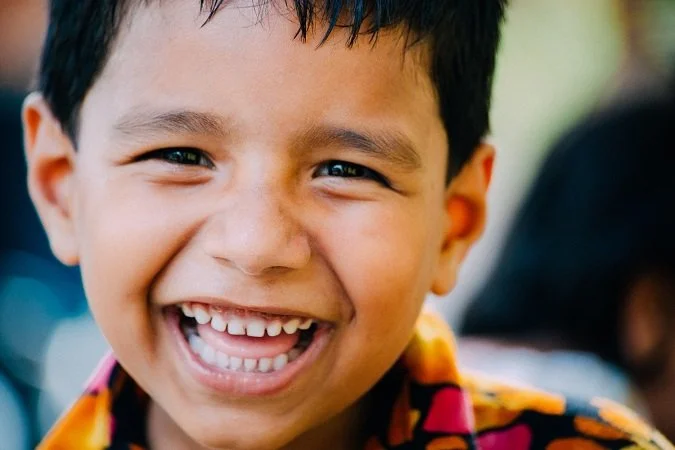
Image: Pexels
Where I am still incredibly stubborn is when I decide to do something and commit myself to it. Then I will usually do it, no matter what. The values behind that are integrity and perseverance.
There's a familiar saying that insanity is doing the same thing over and over again while expecting a different result. I think that's true in a closed system where all the variables remain fixed. But life isn't a closed system. Things change. We change. Circumstances change.
So I sometimes think doing the same thing over and over again while hoping for a different result is actually persistence and perseverance. In fact, I've always found it interesting that the word expecting is doing so much of the heavy lifting in that saying. That's where the problem lies. If I'm willing to keep trying, learn from what happens and adapt when necessary, then repeating the attempt isn't insanity. It's persistence.
I quite like my stubbornness in that sense because it helps me get things done.
I wake up at 4am every weekday, rain or shine, summer or winter. I'm in the gym at 5am and home and ready for the day by 7am. I sometimes work twelve hours a day. I don't do these things because I think I'm particularly special or disciplined. I've simply learned what works for me and what helps me function at my best, and I'm stubborn about keeping the commitments I've made to myself.
But whenever I talk about values, behaviours and character traits, I'm reminded that it's very easy — and very convenient — to define ourselves in absolute terms. We attach labels to things because labels make the world easier to understand.
It works on paper. But we don't live life on paper.
Human beings are complicated. We live in a diverse, constantly changing world, and nothing is absolute. I can be stubborn and flexible, open-minded and firmly set in my convictions, curious and cautious, depending on the situation and even my emotional state.
Understanding that has allowed me to give myself a lot more grace and compassion.
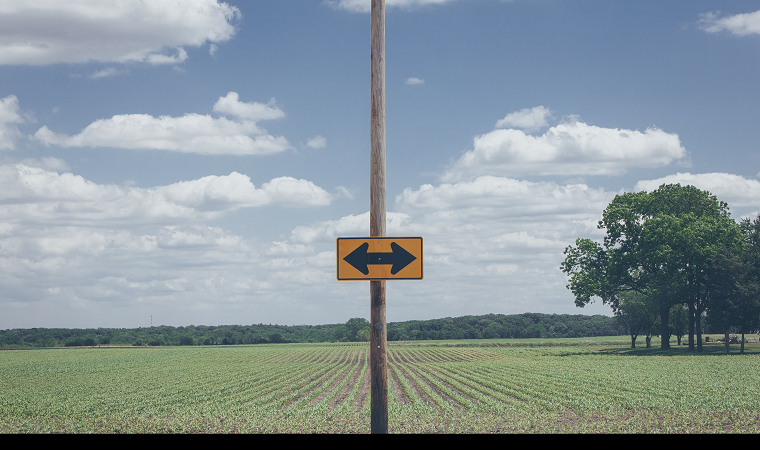
Image: Pexels
I used to think of myself as hardworking, for example, but then I'd have days when I wanted nothing more than to rest. The contradiction bothered me. If I was hardworking, why didn't I want to work? Was I lying to myself? Did I actually need to change the label and admit that I was lazy?
I've realised that neither label is necessary.
I can be hardworking and need to rest. I can be ambitious and occasionally have no ambition whatsoever. I can be confident one day and uncertain the next. Those things don't have to cancel each other out.
One of the most rewarding things reflection has given me is the realisation that I'm not necessarily the same person I was last week, last month or last year. I don't have to remain faithful to arbitrary labels I've applied to myself in the past.
I can change. I can contradict myself. I can be perfectly imperfect. And perhaps that's another form of freedom: consciously choosing who I want to be today rather than feeling obliged to remain the person I decided I was yesterday.
8 History is a passion of yours and you have many intriguing posts on Listverse (link below). Where does the attraction lie?
I find history fascinating because, ultimately, it's nothing more than a collection of stories about human nature.
I believe storytelling is a fundamental part of being human. We tell stories about the past to give the present context. We're endlessly fascinated by questions like: Where did we come from? How did we get here? Why do we behave the way we do? What can we learn from the people who came before us?
Studying history is one of the ways we try to make sense of all of that.
What fascinates me most isn't really the dates, battles and names, although I love all of that too. It's the people behind them. People who loved, feared, hoped, betrayed, sacrificed, created, destroyed and made decisions that changed the lives of people they would never meet. The further you look into history, the harder it becomes to see humanity as something separate from yourself. The same fears, ambitions, prejudices, hopes and mistakes keep appearing, just wearing different clothes.
I often think about this in the context of my own history. We all carry a story about ourselves, built from the things that have happened to us and the meaning we've attached to them. But history isn't the same thing as destiny. The fact that something happened doesn't mean it has to determine what happens next.
That's where this connects so strongly with everything we've already discussed around Preflection and narrative identity. Reflection asks us to look back at our own history with enough distance to notice the story we're telling ourselves about it. Sometimes that story is accurate and useful. Sometimes it isn't. Sometimes we've taken one chapter and decided it defines the entire book.
History teaches us that people and societies are constantly changing, and I think the same is true of us. We are shaped by our past, but we are also continually writing what comes next.
Perhaps that's ultimately why I'm so fascinated by history. It reminds me that we are all works in progress, living somewhere between the story we've inherited and the story we're still learning to tell.
Read Jonathan’s posts on Listverse.
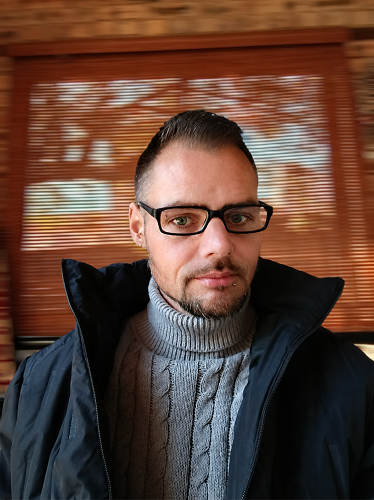
More about Jonathan
Jonathan Blaauw is a digital product specialist working across product development, user onboarding, marketing and compliance, writer of fiction and non-fiction, a writer and the founder of Preflection. He has worked in different fields, including the digital space, insurance and financial services. Jonathan has qualifications in business science and digital marketing and is based in Johannesburg.
Preflection app: https://preflection.app
Email: hello@preflection.app
Instagram: @preflection.app
Read some of Jonathan’s writing on Reedsy and Listverse.
Images of Jonathan Blaauw: supplied
Thumbnail: Pexels