A long-term family caregiver, author, and EECP advocate writes about two strapping young lads, how caregiving changes you, the ‘same mission in a different uniform,’ and opening a clinic in Asheville.
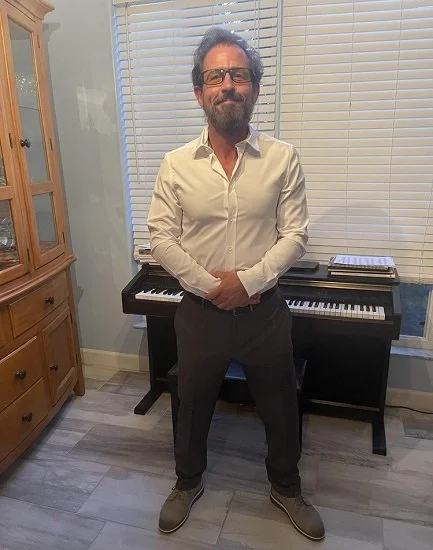
1 You worked as a US Coast Guard Master Chief. What did that entail, and what did you enjoy most?
I served 21 years in the Coast Guard and made Master Chief (E-9), the highest enlisted rank, in 17. Fewer than one percent of enlisted members ever reach it. At that level the job is less about doing the work yourself and more about developing people: mentoring, advising commanding officers, and making sure the crew has what it needs to do a demanding job well. What I enjoyed most was watching young men and women I'd mentored grow into leaders themselves. The Coast Guard's mission is saving lives and protecting people, and that sense of purpose never left me. In many ways, my work with EECP is the same mission in a different uniform.
2 How do you feel about the ocean?
The ocean has been part of my life for as long as I can remember. I spent my career on it and around it, and today I live on a barrier island in Melbourne Beach, Florida, with the Atlantic on one side and the Indian River Lagoon on the other. Serving at sea teaches you respect quickly, because the ocean doesn't negotiate. It's also where I go to clear my head. A walk on the beach at sunrise is still one of the best ways I know to start a day.
3 In our podcast you mentioned you've always enjoyed keeping fit. Do elaborate.
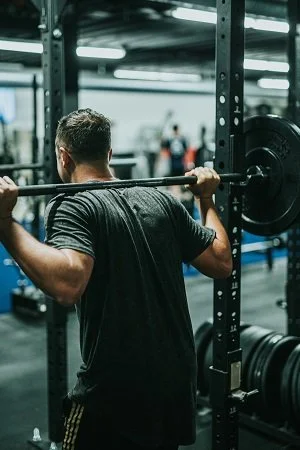
Fitness was a requirement in the Coast Guard, but for me it became a way of life. Today my routine is running, resistance training and regular sauna sessions. In 2021 I was told I needed bypass surgery, and that was a wake-up call. It taught me that being fit on the outside doesn't guarantee your arteries agree. That experience led me to EECP, and it changed how I think about health: circulation is the foundation everything else rests on. I train now not to look a certain way, but to stay capable and independent for as long as possible.
Image: Unsplash - model used
4 You describe yourself as a long-time caregiver. How did that come about?
It began in 2008, when my wife Jennifer was diagnosed with scleroderma. Together we found an alternative route to treat it, and it worked. In 2010 she was diagnosed with lymphoma, and again we found an alternative path forward, including through a recurrence in 2017. The hardest chapter came in 2015, when Jennifer suffered a traumatic brain injury at work that initially left her unable to walk or talk. Her recovery was beyond challenging, and for many years helping her consumed my entire being.
Caregiving changes you. You learn to advocate, to ask hard questions, and to look beyond the first answer you're given. Above all, it showed me how often families are never told about options that could help. That lesson is a big part of why I do what I do with EECP today.
5 How do you and Jennifer reload your batteries?

Jennifer and I recharge in a few simple ways: time near the water in Melbourne Beach, time in the mountains around Asheville, North Carolina, and time with family. We also have a daily ritual. I write her a good-morning note every day, and it keeps us connected even on our busiest days. Jennifer is a nurse with a doctorate in nursing practice, so we share many of the same passions, but we work hard to protect time that has nothing to do with work.
Image: Pexels
You can also listen to Jack’s episode on Enhanced External Counterpulsation and the benefits of this well-researched, FDA-approved therapy supporting vascular health.
6 In our podcast episode, you mentioned "two strapping young lads"...
Those are my sons, Brandon and Noah, and they are my proudest accomplishment. Brandon is an Air Force JAG officer in Washington, DC, serving as general counsel at Air Force Research Command, and was recently selected for Major. He and his wife are expecting their first child this November, so I'm about to become a grandfather. Noah is finishing medical school at the top of his class and is beginning an internal medicine residency in Asheville. Having a future physician in the family keeps me honest about the science.
7 How did you attain such a good grasp of the medical field without being a medical professional?
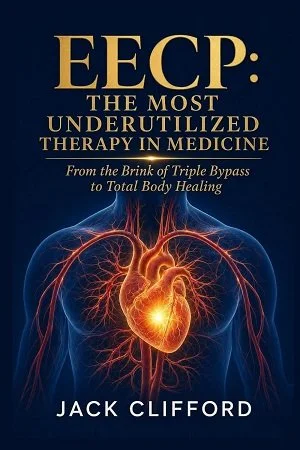
EECP: The Most Underutilized Therapy in Medicine: A Comprehensive Guide for Patients, Clinicians, and Anyone Who Wants to Understand Vascular Health by Jack Clifford is available at Amazon, also in audioform, and on https://eecpbook.com/
Necessity, mostly. Years of caregiving for Jennifer, followed by my own diagnosis, pushed me to learn, and once I started reading the research on EECP I couldn't stop. I've since written "EECP: The Most Underutilized Therapy in Medicine" and 29 condition-specific guides in The Circulation Solution series, which meant working through decades of peer-reviewed studies. I'm also surrounded by good teachers: Jennifer's nursing background, my son's medical training, and the physicians and EECP providers I work with. My Coast Guard habit of asking "show me the evidence" helps too. I'm always careful to say I'm an advocate and educator, not a clinician.
8 What are your hopes and dreams for the future?
My dream is simple: that no one who could benefit from EECP goes without it because they never heard of it or couldn't find it. Right now there are fewer than 150 EECP providers in the entire United States. I'm working to change that by helping new clinics open, training technicians and providers, opening a clinic in Asheville, and making the therapy more accessible, including at home. Personally, I hope to be a healthy, active grandfather for many years, and to look back knowing I helped thousands of people find a therapy that gave them their lives back.
More about Jack
Jack Clifford is a long-term family caregiver, EECP advocate, author, founder of ECPLocator.com and EECPbook.com and former US Coast Guard Master Chief (E-9) from Melbourne Beach, Florida.
Jack’s dream is that no one who could benefit from EECP goes without it because they never heard of it or couldn't find it. There are currently fewer than 150 EECP providers in the US, and he’s working to change that by helping new clinics open, training technicians and providers, opening a clinic in Asheville, and making the therapy more accessible, including at home. He also works with interested individuals and providers abroad.
Find EECP treatment near you, book a free education and access consult with Jack, or find a Free Patient Guide on https://eecplocator.com/
The Circulation Solution Series documents 29 condition-specific guides, ranging from Parkinson’s, erectile dysfunction, vascular recovery, neuropathy, kidney disease, and athletic performance: click on “Explore The Series” on https://eecpbook.com/
The EECP Retreat Centre in Asheville, North Carolina: www.wakingdreamswellnessretreat.com
Thumbnail image: Unsplash
Photograph of Jack Clifford: provided